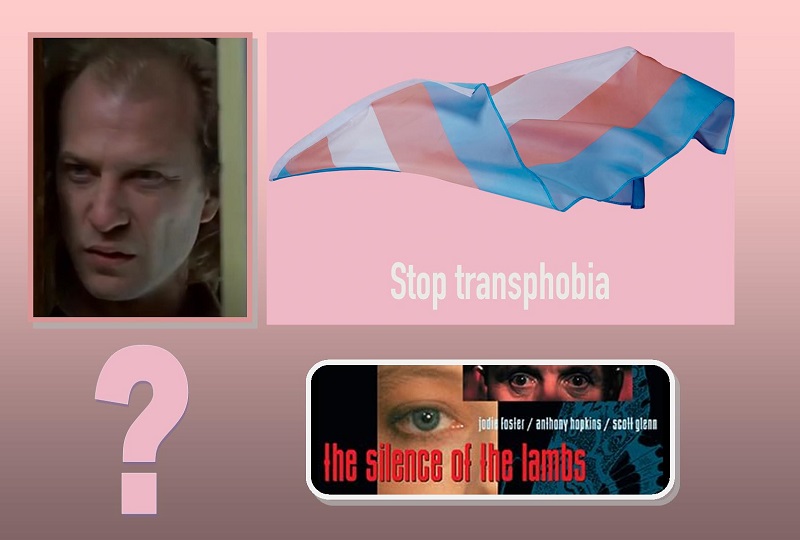
So a couple months back the familiar complaint about Buffalo Bill’s character in The Silence of the Lambs again made rounds on social media – that his depiction as a serial killer maligns the transgender community. Media were excited to drum the beat about Ted Levine, the actor who played Buffalo Bill in the movie, admitting that he has become a lot more wiser and sees that his character didn’t do justice to the trans community (my phrasing). In his words as cited in Parade:
“It’s unfortunate that the film vilified that, and it’s fucking wrong. And you can quote me on that.”
I wanted to address this point about the movie that had been on my mind well before Levine rekindled it via his interview. But then I stumbled upon this article in California Globe by some real good writer, J. Mitchell Sances, who nailed it in his write-up and spoke much of what was on my mind to dismiss the transphobia complaint.
At its core, the issue is two-tiered and can be broken down in two questions.
First, is Buffalo Bill really a transsexual character in the story? Those who have not seen the movie with good interest and attention would answer yes; of course, the real answer is no and is expressly stated so by Hannibal Lecter (Anthony Hopkins) in his third meeting with Clarice Starling (Jodie Foster). At the end of their famous quid pro quo scene, Lecter tells Clarice:
Billy is not a real transsexual. But he thinks he is; he tries to be. He has tried to be a lot of things I expect.
Lecter’s clarification comes after Clarice mentions that documented history of transsexuals reveal they are not violent people and are in fact very passive. This part is missed as easily by those crying transphobia in the movie as that of Billy’s real problem – namely violent tendencies arising out of serious mental pathology, NOT gender confusion. In fact, Clarice’s line could be used to argue that the movie really educates people in favor of real transsexuals being peaceful people.
But in the political frame of narrative, this point could undermine the effort to draw attention to serious mental illness among abused men who use the supposed gender dysphoria as a justification to seek revenge on society – turning on their own body (mutilation and unnatural transformation) being one side of this pathology.
The second question, addressed by Sances in his article, relates the broader issue that could apply to any racial, religious, political, or other group of people in a society. Is the depiction of a villainous character (Buffalo Bill) an indictment of the entire group or community (say the LGBT one)? The answer would be a resounding NO. Bad people, or criminally minded individuals, are found in all human populations and communities. It’s only fair to present this fact by creating good and bad characters among all communities. And mature audiences with reason and intelligence would know that it is a fact and doesn’t reflect on the entire community. Alexandra Marshall had the last word on it in her X post.
“Find me the film studio that’s apologised to straight white men for making them criminals in a film.”
This is beyond stupid.
You want representation in film.
Then you complain about representation.
Find me the film studio that’s apologised to straight white men for making them criminals in a film.
Imagine how f-ing ridiculous that would be. pic.twitter.com/dDuD8c4cfw
— Alexandra Marshall (@ellymelly) February 15, 2026
Now won’t that make the tallest mountain of apologies from Hollywood towering over all other mole hills of complaints?